📊 BTLT39 — the BDR of TLT
Asset Guide · Global fixed income
BTLT39: lend to the US without leaving B3
In reals, in the world's safest credit. And it gains value in two ways: from the American bond and from the dollar.
What it really is
From the US Treasury to your home broker
- Treasury bondsthe US borrows
- TLTETF with the long-bond basket, in dollars, in the US
- BTLT39BDR: a receipt on B3 that represents TLT
- Youbuy it in reals, just like any stock
Buying TLT directly would require an account with an American broker. In one sentence: BTLT39 = lending to the US, in dollars, without leaving the Brazilian stock exchange — and collecting interest every month.
How it's priced
Doubly dollar-denominated: two forces pull the price
The price of TLT
in dollars
- TLT rises abroad, BTLT39 rises here
The USD/BRL rate
in reals
- Dollar rises, BTLT39 rises — even if TLT didn't move
The detail almost nobody explains: TLT and the dollar tend to move in opposite directions.
The tug of war
One movement offsets part of the other
Day to day, this makes BTLT39 more stable than a purely dollar-denominated asset. In a panic, both can unlock in the same direction and the asset moves sharply — up or down, depending on the macro scenario.
The monthly dividends
The bonds' interest becomes monthly income
Figures per year, in dollars; the taxes you'd pay anyway. TLT distributes the income every month and BTLT39 passes it on in reals — on top of the price movement of the bond and the exchange rate. And it tends to appreciate when US interest rates fall again.
Where it fits in the portfolio
Defense and patience, not a bet
Where it makes sense
defensive, dollar-denominated anchor
- With TLT near historic lows
- An interest-rate asset usually has its best entry point during pessimism: high rates tend only to fall
Where to avoid
quick-gain bet
- Long bonds suffer if rates rise further
- Currency can work against you in the short term
It's a position for diversification, not concentration.
How to invest in practice
Just like buying a stock
- Home brokerfrom your bank or broker
- Search BTLT39the code on B3
- Buy in realsno foreign account or dollar cash required
- Collect every monththe interest passed on in reals
Keep this in mind
Three ideas from the guide
- It's lending to the USBTLT39 is the B3 receipt for an ETF of long US Treasury bonds.
- Two forces on the priceTLT in dollars and the dollar in reals — which tend to offset each other.
- The risk is priceDefault is almost unthinkable; interest rates and currency are what move the price.
Quick quiz · 1 of 2
TLT stayed flat and the dollar rose. What happens to BTLT39?
?
It's doubly dollar-denominated. The price depends on TLT in dollars and on the USD/BRL rate: if the dollar rises, BTLT39 rises even if TLT didn't move.
Quick quiz · 2 of 2
What is the main source of BTLT39's fluctuation?
?
The risk is price, not default. When US rates rise, the price of TLT falls (and vice versa). Currency comes next; the BDR issuer is a marginal risk.
Guide complete
Next guide
 8/9Next guideGoldContinue
1 / 14
Use the ← → keys, swipe on your phone or tap the dots.
The asset in numbers
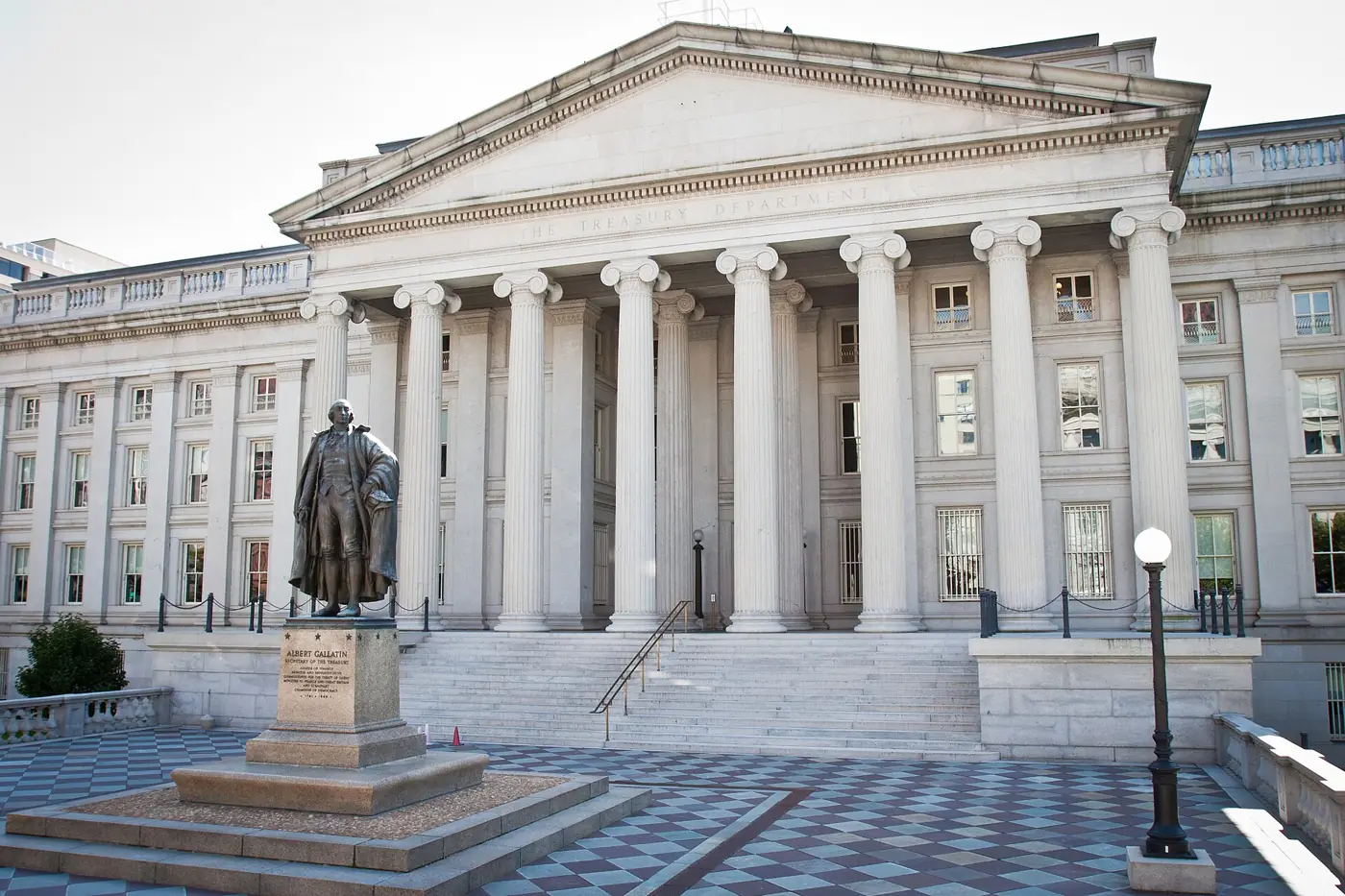
Photo: Tony Webster, CC BY-SA 3.0, via Wikimedia Commons