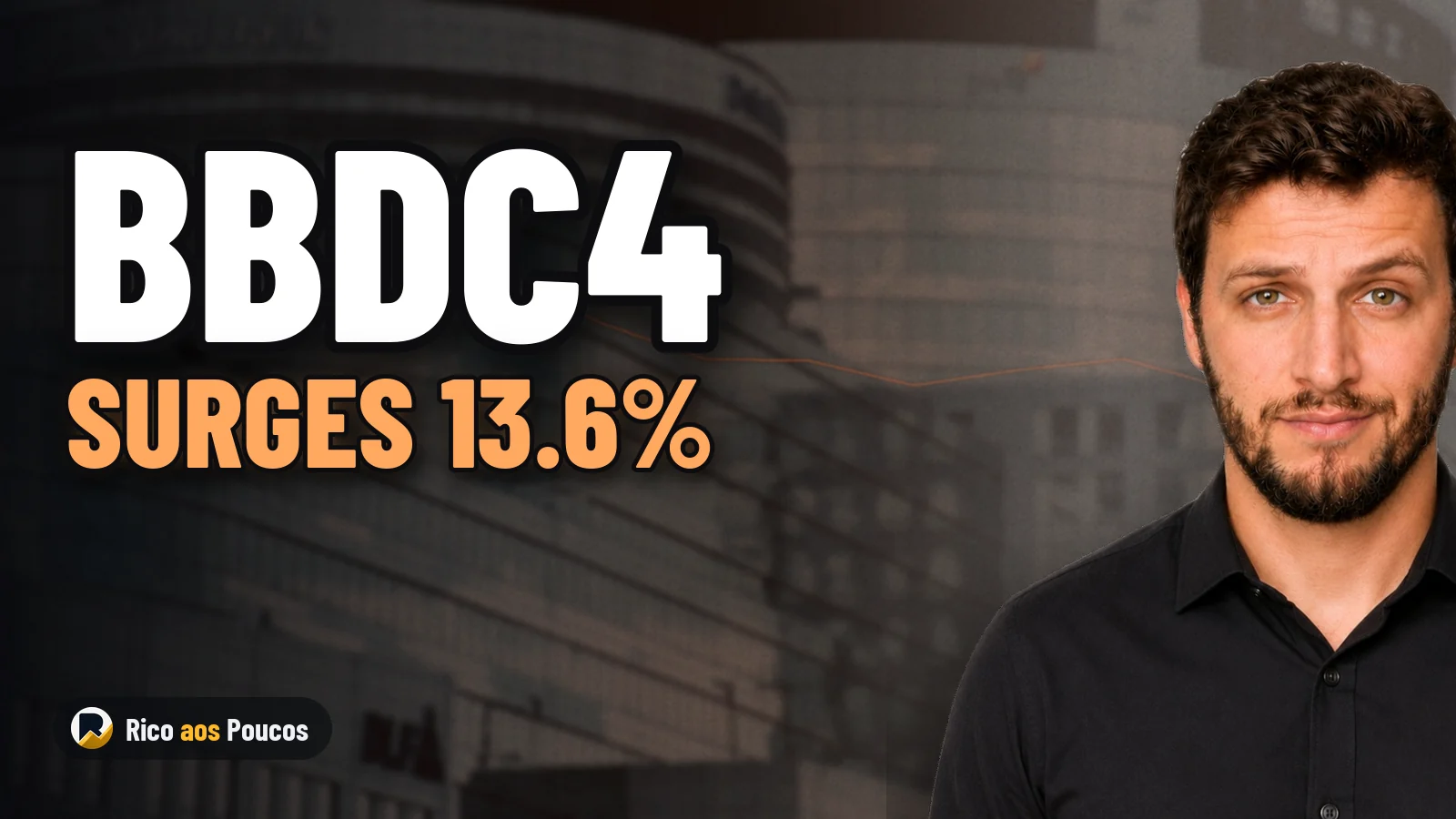


- The fact: Bradesco's preferred stock, BBDC4, surged 13.6% in a single trading session, leading gains in the financial sector on the exchange.
- The catalyst: The move was driven by a sharp drop in future interest rates (DI) and a lower perception of political risk in the post-election scenario.
- The effect: Banking assets that had been trading at steep discounts underwent a rapid repricing amid heavy institutional capital inflows.
A combination of macroeconomic relief and a flattening yield curve prompted the financial market to aggressively reprice major banks. The move pushed BBDC4 shares up by an impressive 13.6%, outperforming the average performance of the Ibovespa over the same period.
Why Did Bradesco's BBDC4 Stock Surge 13.6%?
BBDC4 shares jumped 13.6%, driven by a sharp drop in future interest rates and a reduction in post-election political risk. The decline in DI rates eased banks' funding costs and lowered default expectations, sparking strong demand for discounted financial sector equities.
Coverage by InfoMoney highlighted that the vigorous advance in Bradesco's shares took place amid a widespread wave of optimism across the Brazilian financial sector. The sharp drop in future interest rates across the entire curve was the central catalyst for local and foreign investors to rebuild positions in major financial institutions.
To understand the scale of this move, it is necessary to examine how the market prices major banks during inflection points in the yield curve. When long-term interest rates decline, the perception of systemic risk drops almost immediately, directly benefiting equities that had been trading with compressed multiples.
A +13.6% gain in BBDC4 driven by the closing of the DI curve and a banking rally.Source: InfoMoney
What Fueled the Financial Sector and Bradesco Rally?
Three combined factors created the ideal environment for the stock surge: relief in the yield curve, clarification of the electoral scenario, and attractive valuations. This set of variables reduced volatility and drew capital that had been parked in defensive fixed-income positions back into equities.
The decline in long-term interest rates lowers credit costs and improves projections for future loan defaults.
The easing of electoral uncertainties brought predictability and reduced the risk premium demanded by the market.
BBDC4 shares were trading at severely discounted valuation multiples relative to their historical price-to-book average.
Historically, BBDC4 exhibits high sensitivity to yield curve fluctuations due to Bradesco's balance sheet structure. When long-term interest rates rise, funding costs increase, net interest margins face pressure, and provisions for doubtful accounts tend to climb as the credit quality of households and businesses deteriorates.
Conversely, relief in the DI curve generates an instant compression of credit risk. Market analysts reassess net income estimates and adjust commercial banks' price targets, triggering block-buy orders that cover short positions held by institutional investors.
How Does the Drop in Future Interest Rates Directly Affect Bradesco's Balance Sheet?
Falling interest rates reduce funding expenses and improve the bank's net interest margin in the market. In addition, a milder interest rate environment stimulates demand for new loan originations and lowers default risk across the expanded credit portfolio.
Bradesco faced a challenging credit cycle over recent quarters, requiring an internal operational restructuring led by management to contain defaults and exercise greater selectivity in borrower screening. With interest rates falling on the futures market, the margin of maneuver for this restructuring increases considerably.
Another fundamental point is capital flow composition. When emerging markets experience periods of declining risk premiums, foreign institutional investors often use BBDC4 and other major banks as liquidity vehicles to allocate capital to Brazil, accelerating the stock's appreciation over the short term.
For investors who already hold BBDC4 in their portfolios, the sharp rally reduces the severe discount that had been weighing on the bank's multiples. However, it is crucial to separate temporary appreciation driven by macroeconomic optimism from the ongoing operational recovery of the balance sheet in coming quarters.
What Should Investors Monitor Going Forward?
The sustainability of the stock rally depends on the delivery of solid operational results and confirmation of improving credit conditions. Macroeconomic optimism opens the door for a rally, but continued appreciation of the stock requires the bank to keep expanding its ROE (return on equity) and controlling its cost of risk.
Default trends — Track whether long-term delinquency indicators continue on a downward trajectory in quarterly earnings reports.
Future interest rate behavior — Observe whether the flattening of the DI curve consolidates or if long-term rates bounce back in the coming months.
Return on equity (ROE) — Monitor Bradesco's ability to bring its profitability back toward the historical levels seen before the monetary tightening cycle.
The significant appreciation of BBDC4 highlights how stock exchange assets react swiftly when the macroeconomic environment takes a favorable turn. Although the 13.6% move reflects a meaningful repositioning by the financial market, consolidating this trend will require continued discipline in credit underwriting and margin expansion in subsequent earnings reports.
Rico aos Poucos Take
The 13.6% surge in BBDC4 demonstrates how relief in future interest rates and lower political uncertainty can unlock value in discounted financial sector equities. The move provides vital momentum for the asset, but long-term investors should closely monitor net interest margins and credit portfolio quality to confirm whether operational recovery will match market euphoria.
