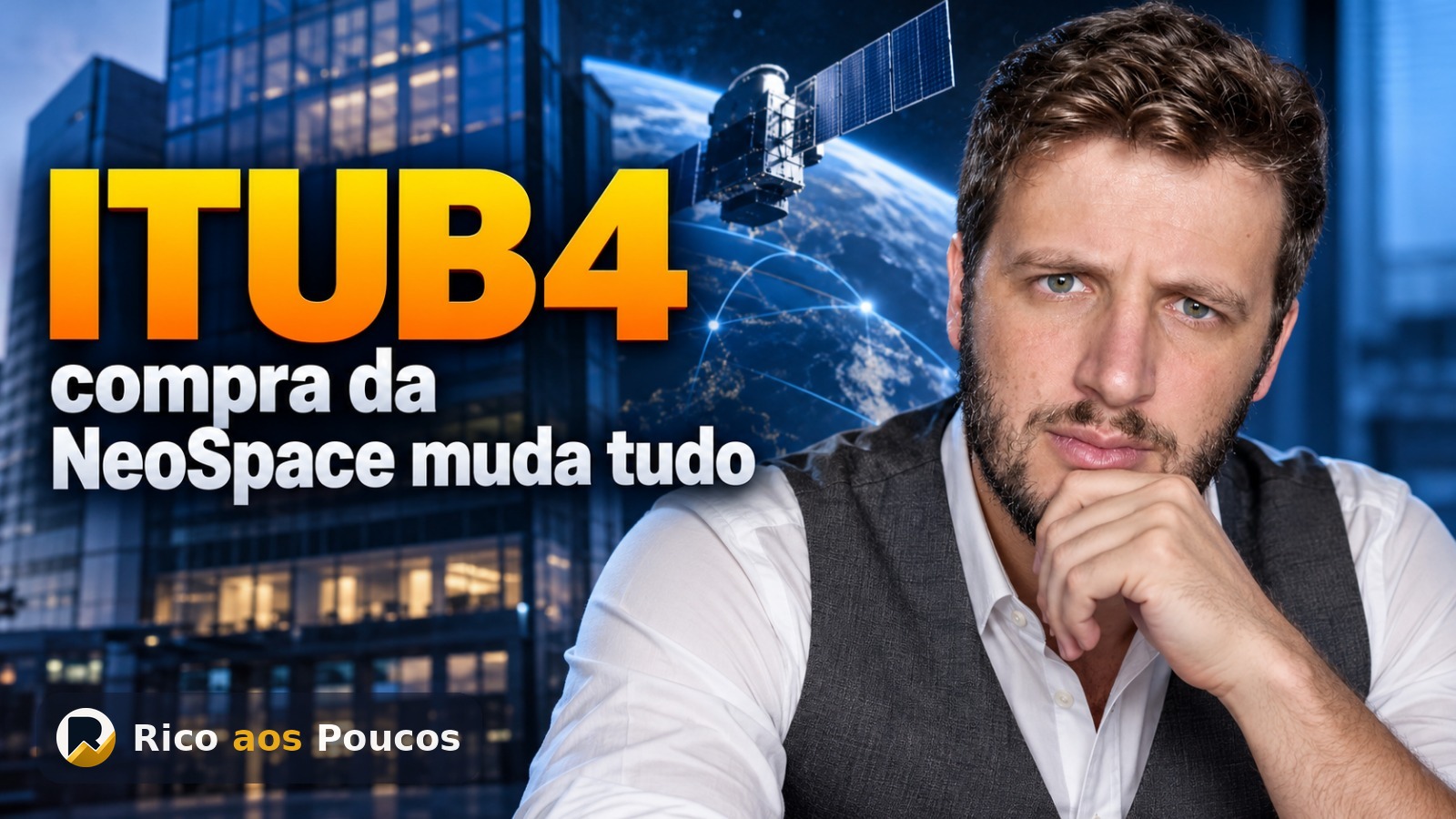
- The Fact: Itaú Unibanco has acquired 100% of the shares of NeoSpace A.I. Technologies for R$ 2.9 billion.
- The Financial Impact: The amount represents a minimal fraction of the bank's annual earnings and does not pressure dividend distributions.
- The Thesis: The move aims to safeguard Itaú's technological leadership against fintechs and accelerate operational efficiencies.
Itaú Unibanco Holding S.A. has announced that it signed an agreement to acquire 100% of NeoSpace A.I. Technologies Ltda. for R$ 2.9 billion. The transaction reinforces the conglomerate's strategy to integrate cutting-edge artificial intelligence into its financial ecosystem without compromising the dividend appetite of ITUB4 stock.
What Happened to Itaú Unibanco's ITUB4 Stock?
Itaú Unibanco (ITUB4) confirmed in a material fact filed with the market that it signed a purchase and sale agreement for 100% of NeoSpace A.I. Technologies Ltda. According to the document published by the bank on October 26, 2026, the acquisition involves the complete integration of the startup's technological solutions and development team, which specializes in artificial intelligence applied to the financial sector.
The transaction is part of a long-term strategic push by Itaú to lead digital transformation in the domestic banking sector. Rather than relying exclusively on third-party licenses or external partnerships, the bank decided to internalize proprietary intellectual property in language models and complex process automation.
Total capital outlay for the purchase of 100% of NeoSpace's share capital.
Brazilian technology startup focused on deep artificial intelligence.
Equivalent to less than one month of the bank's net income generation.
The acquisition remains subject to review by regulatory authorities. As is standard for transactions of this size in the Brazilian financial sector, the closing of the deal depends on approval from Brazil's antitrust regulator, CADE, and the Central Bank of Brazil (BACEN).
What Is the Strategic Objective of the NeoSpace Acquisition?
The purchase of NeoSpace aims to accelerate operational efficiency gains and product personalization for Itaú's more than 70 million clients. The startup has developed proprietary AI architectures that optimize everything from predictive credit analysis and fraud prevention to automated customer service across digital channels.
Allocating R$ 2.9 billion to technology is a response to growing competition from digital banks and fintechs. Although Itaú has posted high returns in recent quarters—maintaining its Return on Equity (ROE) at the top of the sector—sustaining this competitive advantage requires continuous investment in lowering its operational efficiency ratio.
By incorporating NeoSpace's technology directly into the bank's systems architecture, management expects to reduce service bottlenecks, lower fraud losses, and expand cross-selling capacity for products like insurance, investments, and personal credit in an automated manner.
Does the NeoSpace Acquisition Put ITUB4 Dividends at Risk?
No, the R$ 2.9 billion cash outlay does not compromise Itaú Unibanco's policy for dividends and interest on equity (JCP). To put the figure in perspective, Itaú has been generating substantial quarterly recurring profits, meaning the investment represents a modest slice of the institution's annual cash flow generation.
The bank's capital model remains solid. Itaú's Tier 1 Capital ratio maintains a comfortable cushion over Central Bank requirements, allowing the institution to execute targeted mergers and acquisitions in the technology segment without needing to withhold extraordinary distributions earmarked for shareholders.
For investors holding ITUB4 stock in their portfolios, the move is a clear sign of capital allocation discipline: the bank is using part of its excess cash to insulate its operations against new competitors and generate long-term operational synergies while maintaining predictable dividend and JCP payments over the short and medium term.
What Should ITUB4 Investors Monitor Going Forward?
Market focus now shifts to regulatory approval and the timelines for integrating teams and technologies. While the event establishes a positive long-term thesis for the asset, the actual capture of value depends on the continued execution of the bank's technology leadership.
Regulatory approval — Monitor statements from CADE and the Central Bank to confirm the acquisition is cleared without restrictions or operational remedies.
Quarterly earnings releases — Watch for disclosures in upcoming Itaú earnings reports regarding the accounting of the acquisition's goodwill and the NeoSpace integration schedule.
Efficiency ratio trends — Monitor whether artificial intelligence gains translate into marginal improvements in the ratio between administrative expenses and operating revenues.
Note on institutional timeline: Until the formal closing of the deal, NeoSpace will continue to operate autonomously. Itaú stated that it will keep the market updated on the fulfillment of the conditions precedent stipulated in the contract.
Investor Verdict
The acquisition of NeoSpace for R$ 2.9 billion reaffirms Itaú Unibanco's (ITUB4) commitment to using its cash position to lead technological innovation in the financial sector. The transaction strengthens the company's long-term fundamentals and does not alter the stock's appeal for strategies focused on dividends and efficiency gains.
