What Happened to the Tanker in the Strait of Hormuz?
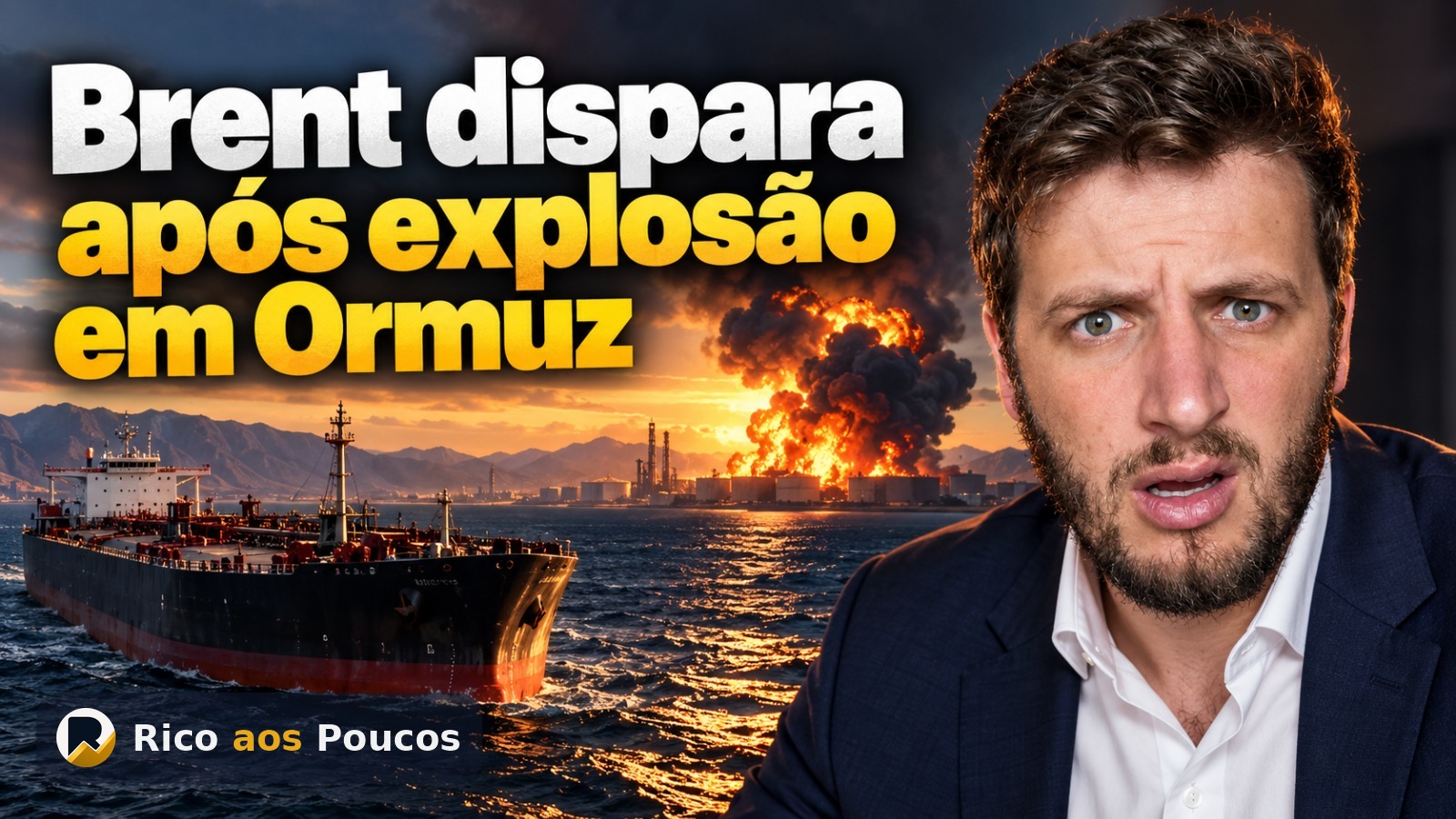
Iran's Revolutionary Guard confirmed the explosion of a supertanker in the Strait of Hormuz after the vessel struck a mine. According to Iranian authorities, the incident occurred in the strategic region of Bandar Abbas involving a ship with a carrying capacity of over 2 million barrels of crude oil.
The route in question is considered the primary maritime bottleneck for global fuel supplies. Any interruption or armed threat in Hormuz immediately reverberates through maritime freight costs, insurance rates, and the physical availability of crude. The financial impact was immediate: international Brent crude futures jumped to $109.86 per barrel during trading, registering a sharp daily gain of 3.72%.
With global markets already operating under heightened attention to developments in the Middle East, confirmation of the naval mine attack transformed transport risk from a remote hypothesis into an accomplished fact in the strait.
Why Did the European Central Bank Call the Shock “Too Big to Ignore”?
European Central Bank (ECB) President Christine Lagarde stated that the energy price shock is “too big to ignore” for global monetary authorities. The statement was released following International Monetary Fund (FMI) meetings in Bangkok amid escalating transport tensions in the Middle East.
Lagarde noted that the balance of economic risks has once again tilted in a concerning direction: risks remain skewed to the downside for economic growth and to the upside for inflation. In her assessment, the war in the Middle East exposes energy supplies to violent swings, operating alongside the Russia-Ukraine conflict as a factor that could make price spikes more intense and persistent than projected.
“The energy shock is too big to ignore, but a measured response remains appropriate to keep inflation under control.” Christine Lagarde, President of the European Central Bank (ECB)
The official explained that the ECB will continue basing its decisions on three fundamental criteria: continuous assessment of the inflation outlook and its risks, the evolution of underlying inflation (core price measures), and the strength of the monetary transmission mechanism. She also pointed out that financing conditions were already tightening with the rise in long-term interest rates, which in itself slows economic activity and curbs the pass-through of costs, requiring careful calibration to avoid disorderly recessions.
How Does the Surge in Crude Shake Global Markets?
The soaring commodity brings back concerns that interest rates in major economies will remain elevated for much longer. The S&P 500 index, a benchmark for U.S. equities, felt the renewal of these structural rate apprehensions, while the U.S. dollar found strong support driven by a flight to safety among investors.
Rising energy costs contaminate entire production chains cross-sectionally. When oil climbs toward $110, land and air freight become more expensive, the petrochemical chain adjusts, and industrial costs rise across the board. This severely complicates the convergence of global inflation back to official targets established by authorities.
If shipping routes in Hormuz remain insecure, vessel insurance premiums rise, central banks postpone interest rate cuts, and risk aversion supports the dollar globally.
If naval escorts and diplomatic efforts re-establish swift vessel passage, the military risk premium recedes and the fuel shock dissipates before contaminating core inflation measures.
What Does This Hormuz Shock Change for the Brazilian Investor?
For those investing in Brazil, the impact is not abstract: it hits the wallet through exchange rates, expectations for the Selic rate, and the pricing of local assets. The country produces oil, but global price dynamics are reflected domestically in fuel pricing and government bonds traded in the financial market.
First, the combination of a strengthened dollar driven by international stress and elevated oil prices generates direct pressure on inflation expectations measured by the IPCA. When the Central Bank of Brazil analyzes this unfavorable external backdrop, its room to maneuver in cutting interest rates diminishes sensibly, as cutting rates while emerging market currencies depreciate can accelerate capital flight.
Energy stocks gain revenue, but interest-rate-sensitive sectors suffer: companies tied to oil extraction capture the commodity's surge in their immediate operating revenues, while retail, real estate development, and technology companies suffer from the maintenance of high interest rates. In fixed income, inflation-linked bonds (IPCA+) gain relevance as portfolio protection, while long-term fixed-rate bonds suffer sharp negative mark-to-market volatility amid rising future yields.
Therefore, a prudent stance for individual investors facing geopolitical shocks is to avoid hasty directional bets. Entering the market short out of fear or concentrating positions exclusively in oil following a nearly 4% rally usually results in buying at the top of a speculative movement. The focus should be on preserving long-term margins of safety.
What Should You Monitor Going Forward?
Verification of new damage to civilian vessels and upcoming statements from central banks will dictate the real momentum of this oil rally. Not every violent event in the region turns into prolonged physical rationing, and distinguishing temporary noise from structural change is essential for making sound wealth management decisions.
Naval traffic flow in Bandar Abbas and Hormuz — Track whether international shipping lines and insurers suspend routes or reroute maritime traffic to bypass the African continent.
Behavior of future interest rates and core inflation — Observe whether long-term Treasury and European bond yields continue to climb, forcing stricter monetary stances.
Domestic exchange rate and Petrobras pricing policy — Monitor whether the exchange rate maintains its appreciation bias against the real and how domestic fuel price gaps are managed in the face of Brent at $109.