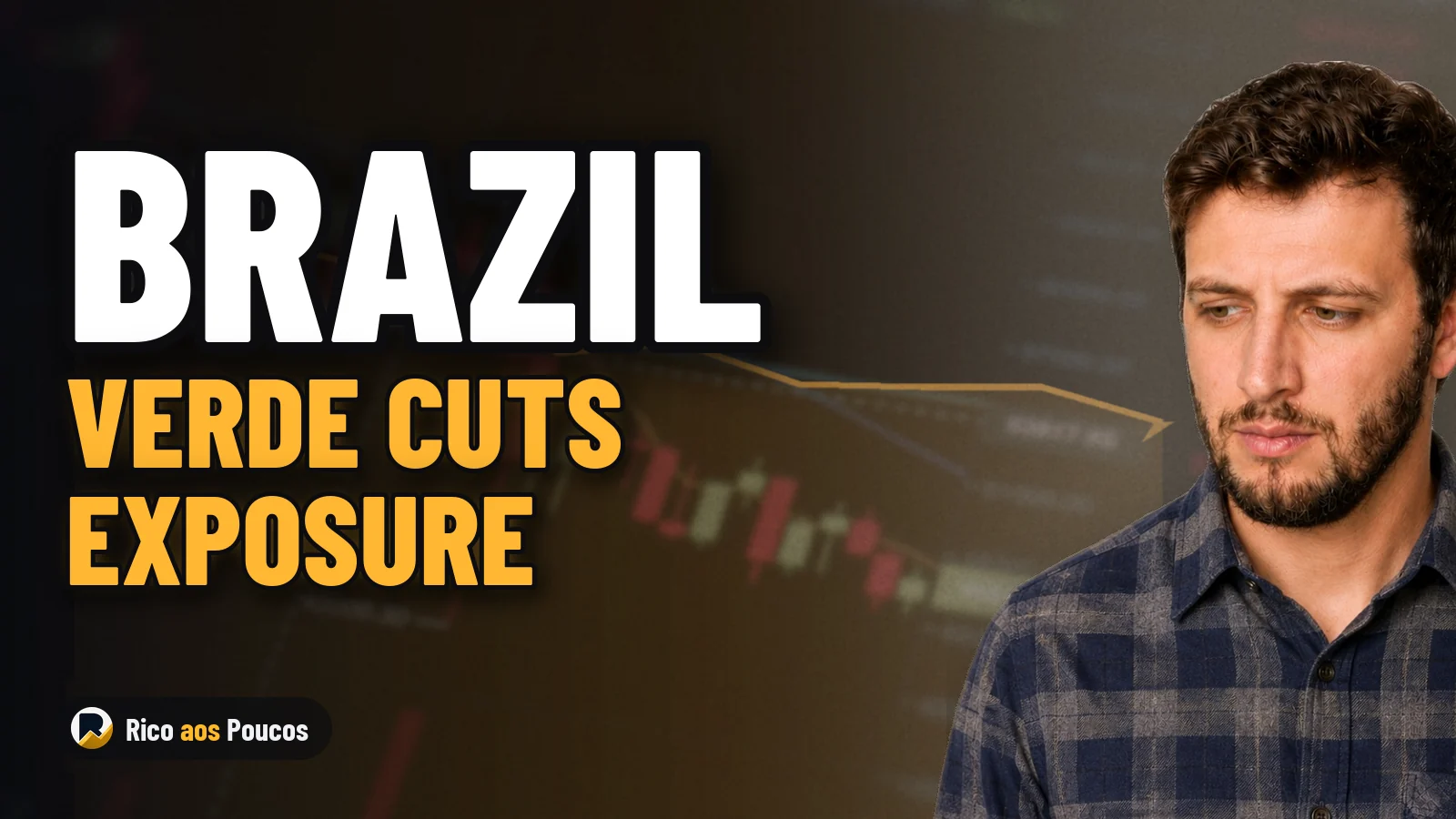


Portfolio manager Luis Stuhlberger, head of Fundo Verde, has reduced the fund's allocation in Brazilian equities and increased its long positions in the U.S. dollar and international assets, according to Verde Asset's latest report to unitholders. The shift reflects a more severe view of the country's fiscal risks, though it does not mean individual investors should liquidate their portfolios in a panic.
Why Did Fundo Verde Buy Dollars and Reduce Its Exposure to Brazil?
Verde Asset informed investors that deteriorating expectations for Brazil's fiscal outlook and persistently high interest rates are limiting the short-term attractiveness of the local stock market. According to the letter sent to the institution's unitholders, the fund cut its variable-income positions in Brazil to expand hard-currency hedges and diversify portfolio risks.
This tactical restructuring is no accident. When large macro hedge funds observe an unfavorable asymmetry between the trajectory of public accounts and the risk premium offered by domestic corporate equities, the natural risk-management move is to seek refuge in the foreign exchange market and global instruments.
Reduced exposure to companies tied to domestic consumption and credit.
Increased long dollar positions to shield the portfolio against a depreciation of the real.
Doubts regarding spending controls keep long-term interest rates high and pressure local assets.
The macroeconomic reading expressed by Stuhlberger reinforces discussions that have been dominating the market regarding the limits of monetary tightening and the consequences of the debt trajectory. As we covered in our analysis of the fiscal adjustment and the dollar, scenarios of budgetary uncertainty typically force abrupt repricing in foreign exchange rates and the yield curve.
What Changed in Fundo Verde's Positioning?
Before adopting this more defensive stance, the fund maintained more aggressive allocations in Brazilian equities in anticipation of prolonged monetary easing and a recovery in local valuations. With the shift formalized in the letter, management opted to downgrade its optimism regarding domestic assets and prioritize capital preservation in hard currency.
It is essential to understand the difference in time horizons between a multi-asset fund managing tens of billions of reais and a retail investor. Managers of large funds must constantly adjust positions due to tactical volatility and redemption flows. Individual investors, on the other hand, can benefit from structural rebalancing without needing to trade every short-term market swing.
How Does This Decision Affect the Retail Investor's Portfolio?
The pivot by one of the country's top managers should not serve as a trigger for impulsive decisions, but rather as a valuable reminder of the importance of international diversification. Tracking the exchange rate for the dollar and keeping a portion of one's wealth exposed to global assets transitions from being a speculative bet to a necessity for portfolio survival.
If your portfolio is 100% concentrated in Brazil—whether in Tesouro Direto government bonds, local stocks, or real estate funds—you are taking on concentrated domestic economic risk. The path laid out by Fundo Verde highlights that protection in hard currency and global assets should form part of any conscious investor's long-term strategy.
Investors who already practice defensive rebalancing strategies tend to react calmly to these moves by major managers. Systematic rebalancing ensures that you sell assets that have appreciated and buy undervalued assets without trying to time market tops or bottoms.
What Should You Do Now If You Hold Stocks or Fixed Income in Brazil?
Instead of completely liquidating Brazilian positions during moments of widespread pessimism—which typically locks in losses—the recommended analytical approach is to review the weighting of each asset class and fill any gaps in external protection.
Evaluate your percentage in global assets — if you have less than 10% to 20% of your wealth unlinked from the real, consider gradual contributions to international ETFs, foreign stocks, or currency funds.
Filter the quality of local equities — companies with low debt, dollar-denominated revenues, or strong pricing power suffer much less in scenarios of high interest rates and fiscal uncertainty.
Maintain active stores of value — beyond direct currency protection, alternative assets and wealth preservation instruments, such as allocations to stores of value and gold, play a relevant role against inflation shocks and global slowdowns.
Following in the footsteps of seasoned managers does not mean blindly copying every trade reported weeks after the fact. The true takeaway from Verde Asset's letter is rigorous risk management: when a country's fiscal premises deteriorate, discipline requires calibrating position sizes and ensuring the portfolio is not held hostage to a single jurisdiction.
The Verdict: Time to Panic or Tactical Adjustment?
The positioning shift by Fundo Verde, led by Luis Stuhlberger, serves as a relevant warning regarding Brazil's fiscal risks, but it does not justify a disorderly liquidation of local assets. For the retail investor, the core lesson is to strengthen international diversification and maintain conscious contributions in hard currency, ensuring structural resilience across any macroeconomic scenario.
