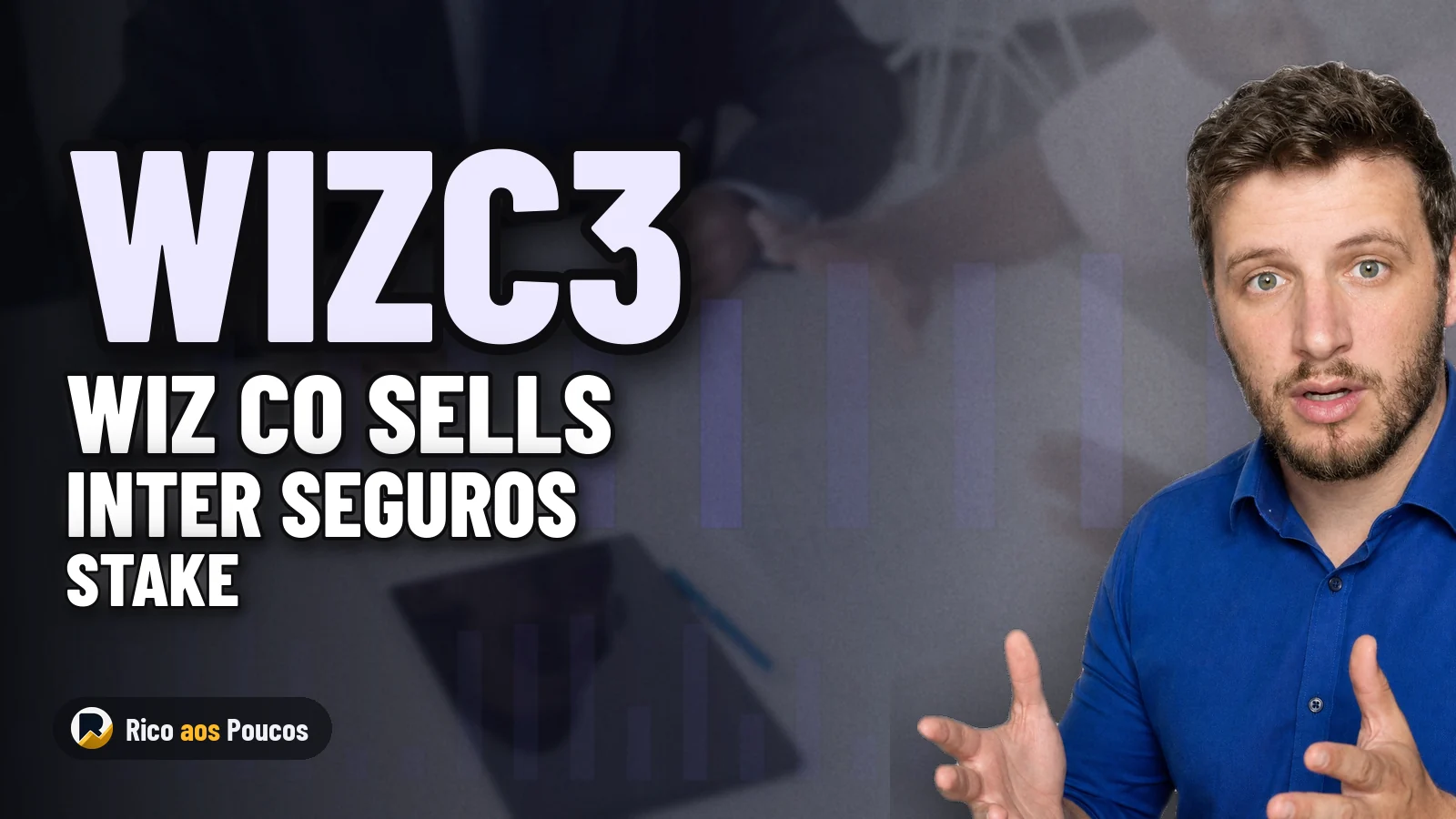


- Wiz Co has signed an agreement to sell its equity stake in Inter Seguros for a total of R$ 409.5 million.
- The transaction unlocks substantial liquidity in a single move, accelerating the brokerage firm's financial flexibility.
- The market is now split between the use of the proceeds for deleveraging and potential payouts to shareholders via dividends.
Wiz Co has announced to the market that it signed agreements to fully divest its stake in Inter Seguros for R$ 409.5 million. The amount represents one of the company's largest recent cash inflows, with direct implications for leverage, capital allocation, and dividends for those holding WIZC3 shares in their portfolios.
What Happened Between Wiz Co and Inter Seguros?
Wiz Co has signed a definitive agreement to sell its equity stake in Inter Seguros for R$ 409.5 million, according to a report published by InfoMoney. The transaction monetizes the brokerage's stake in the joint operation linked to Banco Inter, turning an operating asset into immediate financial liquidity on its consolidated balance sheet.
The relationship between the two companies had been one of the pillars of Wiz Co's revenue diversification since the reconfiguration of its corporate strategy. Historically concentrated on the Caixa Econômica Federal channel, the brokerage sought to build joint ventures and strategic partnerships across different banking and retail fronts. The sale of the Inter Seguros operation seals the divestment of this specific channel, exchanging future commission flows for an upfront lump sum.
For investors following WIZC3, the total contract value stands out when compared to the company's typical market capitalization. R$ 409.5 million from a one-off divestment does not constitute ordinary quarterly revenue, but rather a structural liquidity event that alters the company's solvency profile and management's execution speed.
Financial volume agreed upon in the contract for the sale of the equity stake.
Insurance and brokerage operation developed in partnership within the Inter ecosystem.
Long-term equity stake monetized and converted into balance-sheet liquidity.
Why Did Wiz Co Decide to Sell Its Inter Seguros Stake?
The divestment addresses the strategic need to simplify the company's portfolio and strengthen its cash position. Managing multiple simultaneous partnerships with independent governance structures consumes human capital and regulatory resources, whereas selling the stake for R$ 409.5 million makes it possible to realize the value generated over years of maturing the partnership.
By turning its stake into free cash, management gains maneuvering room. The insurance brokerage sector has required heavy investments in technology, the capture of new B2B distribution channels, and potential complementary mergers. Holding minority stakes where the company does not have full control can limit synergies compared to maintaining strict control over expanding operations.
Additionally, corporate capital costs and interest rate dynamics in Brazil require leveraged structures to be handled with extra caution. By injecting more than 400 million reais into its coffers, management can rebalance burdensome liabilities without resorting to capital calls or diluting current partners.
Where Will the R$ 409.5 Million Received by Wiz Co Go?
The proceeds are expected to be directed primarily toward optimizing the capital structure, with a potential split between cutting gross debt, strategic investments, and remuneration for WIZC3 holders. Because the transaction involves an extraordinary cash inflow, the board of directors will weigh the balance between preserving balance sheet health and rewarding shareholders.
Distributing part of the gain from the sale as extraordinary payouts to boost the fiscal year's yield.
Prioritizing the funds to prepay debentures and bank loans, immediately reducing net financial expenses.
Keeping the money invested in the CDI rate without a defined destination, generating tax inefficiency and disappointing market expectations.
Deleveraging emerges as the most efficient short-term destination. When a service company reduces its financial obligations, accounting net income is relieved month after month by the elimination of contractual interest, expanding its recurring capacity to pay future dividends in a lasting and sustainable way.
What Are the Pros and Cons of Selling the Inter Seguros Stake?
The immediate upside is the elimination of execution risks in the partnership and strengthened balance-sheet solvency, while the downside is the loss of the future operating results that Inter Seguros generated quarterly for the holding company's bottom line.
- An inflow of R$ 409.5 million in clean cash to bolster liquidity and relieve short-term financial pressures.
- A real possibility of extraordinary payout announcements if management decides not to retain the entire amount in cash.
- Renewed operational focus on business units where Wiz Co holds greater control and revenue synergies.
- Reduced diversification of commercial partners, giving up the continuous flow generated by Inter's customer base.
- The need to reallocate this capital with operational returns equivalent to what the partnership provided.
Pay attention to closing terms: signing the divestment contract is the legal step. The actual receipt of the R$ 409.5 million and any potential distribution of payouts depend on fulfilling customary precedent conditions for transactions of this size in the financial market.
What Does This Change for Wiz Co Shareholders (WIZC3)?
For those holding WIZC3 shares, the investment thesis gains an immediate cushion of financial safety. The risk of insolvency or the need for new debt drops sharply with the potential influx of R$ 409.5 million. On the other hand, the company will become more dependent on its other active partnerships to maintain its operating EBITDA growth pace over the coming years.
Income-focused investors should monitor board meeting minutes. Historically, retail investors have closely followed Wiz Co due to its capacity to distribute earnings. If the divestment is converted into extraordinary dividends after paying off higher-cost liabilities, the stock could attract renewed attention from dividend-yield seekers.
What to Monitor in the Next Steps of the Transaction?
Executing a corporate transaction worth more than R$ 400 million involves financial settlement dates and routine regulatory approvals before the final balance hits the company's bank account.
Precedent conditions and approvals — Monitor clearance from insurance sector and antitrust regulators if applicable under the contract terms.
Settlement date and payment schedule — Check whether the R$ 409.5 million will be paid as an upfront lump sum or in installments tied to targets.
Capital destination in material facts — Watch for management announcements detailing how much will go toward debt amortization and how much will become payouts for WIZC3.
Rico aos Poucos Verdict
The sale of the Inter Seguros stake for R$ 409.5 million is a positive corporate event for Wiz Co's balance sheet profile. The transaction turns an equity stake into clear, liquid funds, giving the brokerage the oxygen needed to clear debts, protect operating margins, and evaluate potential extraordinary payouts. For WIZC3 shareholders, the appropriate stance now is vigilance: the trigger for sustainable appreciation will depend on management's discipline in allocating this capital over the coming months.