

What Did Bradesco BBI Project for Copasa (CSMG3)?
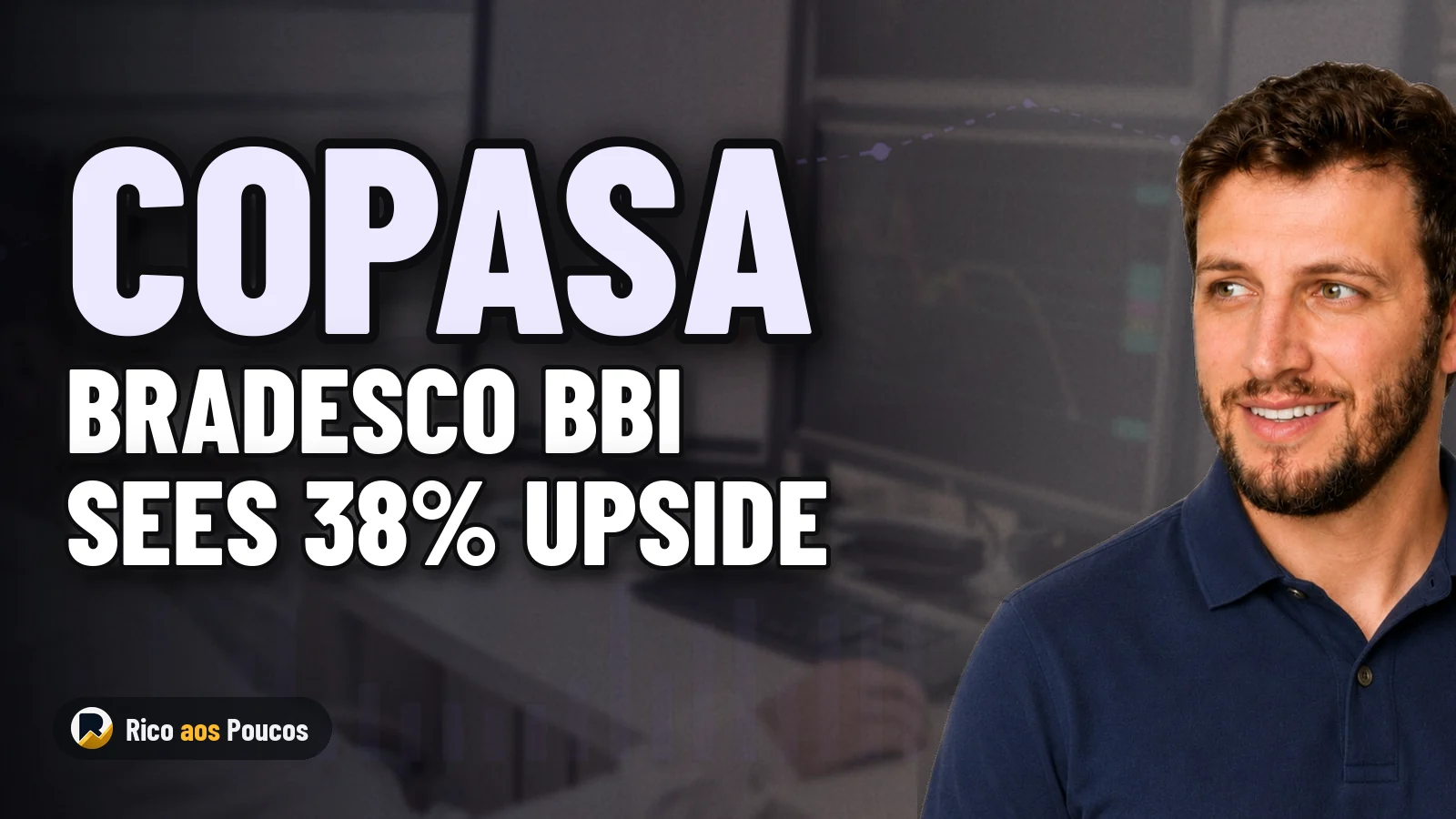
Bradesco BBI has calculated an upside potential of over 38% for Copasa (CSMG3) shares. The financial institution's assessment, published by the portal Seu Dinheiro, places the Minas Gerais sanitation utility in a prominent position on the stock exchange, driven both by the political agenda of privatization and by the business's operational backing.
According to the investment bank's reading, although the company's potential privatization is the catalyst that attracts the most market flow and headlines, the investment thesis does not rely exclusively on the sale of state control to deliver returns to shareholders. The analytical team maintains that the stock's current market pricing still embeds a discount that leaves room for this gain of more than 38%.
For retail investors, this type of report outlines a dual-layered scenario: on one hand, the expectation surrounding the outcome of the state-owned company's sale; on the other, the company's ability to keep generating cash and delivering results under its current model while the discussion moves through political channels.
Why Is the Market Looking at Copasa's Privatization Again?
Progress in discussions regarding the privatization of assets controlled by the government of Minas Gerais has put Copasa back at the center of institutional attention. The sanitation sector has undergone profound transformations in concession and investment rules over recent years, requiring substantial capital expenditures that strain state budgets and make transfer to the private sector a path pursued by the local Executive branch.
In Copasa's case, the privatization thesis is typically compared by analysts to processes already completed in other states, where the migration to private management resulted in cost restructuring, operational margin gains, and the unlocking of market value. It is this precedent that leads institutional investors to follow every step of the legislative and regulatory negotiations in Belo Horizonte.
Bradesco BBI points out, however, that betting solely on a political stroke of the pen carries excessive volatility. Bills, public referendum demands, or federal agreements with the Union often suffer delays and changes in direction. Therefore, the research firm emphasizes that the stock's appeal lies in the fact that the company exhibits sufficient solidity to justify a buy recommendation even in the face of potential hurdles in the privatization timeline.
What Sustains the CSMG3 Thesis Beyond the State Event?
Bradesco BBI's thesis rests on operational vectors that continue functioning in Copasa's day-to-day operations regardless of its ownership structure. The sanitation sector operates under a natural monopoly regime in the regions it serves, featuring inelastic demand for treated water and sewage collection, which imparts chronic predictability to the utility's revenues.
Among the operational pillars supporting the bank's outlook, the following stand out:
- Regulated Revenue Predictability: Periodic tariff adjustments tied to inflation and reviews aimed at recovering operational costs guarantee financial cash flow stability.
- Room for Productivity Gains: Reductions in water distribution losses and optimization of personnel and energy expenses remain internal levers for profitability.
- Shareholder Payout Capacity: Because it belongs to a predictable cash-flow sector, the distribution of earnings (dividends and interest on equity) acts as a volatility buffer for long-term investors.
- Valuation Asymmetry: The discount at which shares trade relative to their regulatory asset base provides a margin of safety should the privatization process take longer than anticipated.
What Risks Must Investors Factor In?
The primary short-term risk for investors entering CSMG3 attracted by the projection of over 38% is political noise. The passage of privatization bills through the Legislative Assembly of Minas Gerais involves partisan disputes, corporate resistance, and complex fiscal negotiations, which frequently trigger sharp price swings with each statement from public leaders.
Another critical point involves the investment cycle required to expand supply and sewage collection networks. If the company remains under public control and faces budgetary limitations or inefficient capital allocation decisions, profitability could fall short of Bradesco BBI's estimates.
What to Monitor in Copasa Moving Forward?
For those who already hold the stock or are studying a position following Bradesco BBI's report, focus should be split between institutional news and quarterly earnings reports. On the corporate front, special attention should be paid to debt figures, default rates, and the execution pace of contracted investments in municipal concessions.
In the political arena, the barometer is the progress of the legal measures structuring the privatization proposal in Minas Gerais. If the bill advances formally through decision-making bodies, the risk premium tends to compress more quickly; if it stalls, the sustainability of the share price will depend strictly on the delivery of operational results and discipline in distributing profits to shareholders.
<^^CLOSE^^>