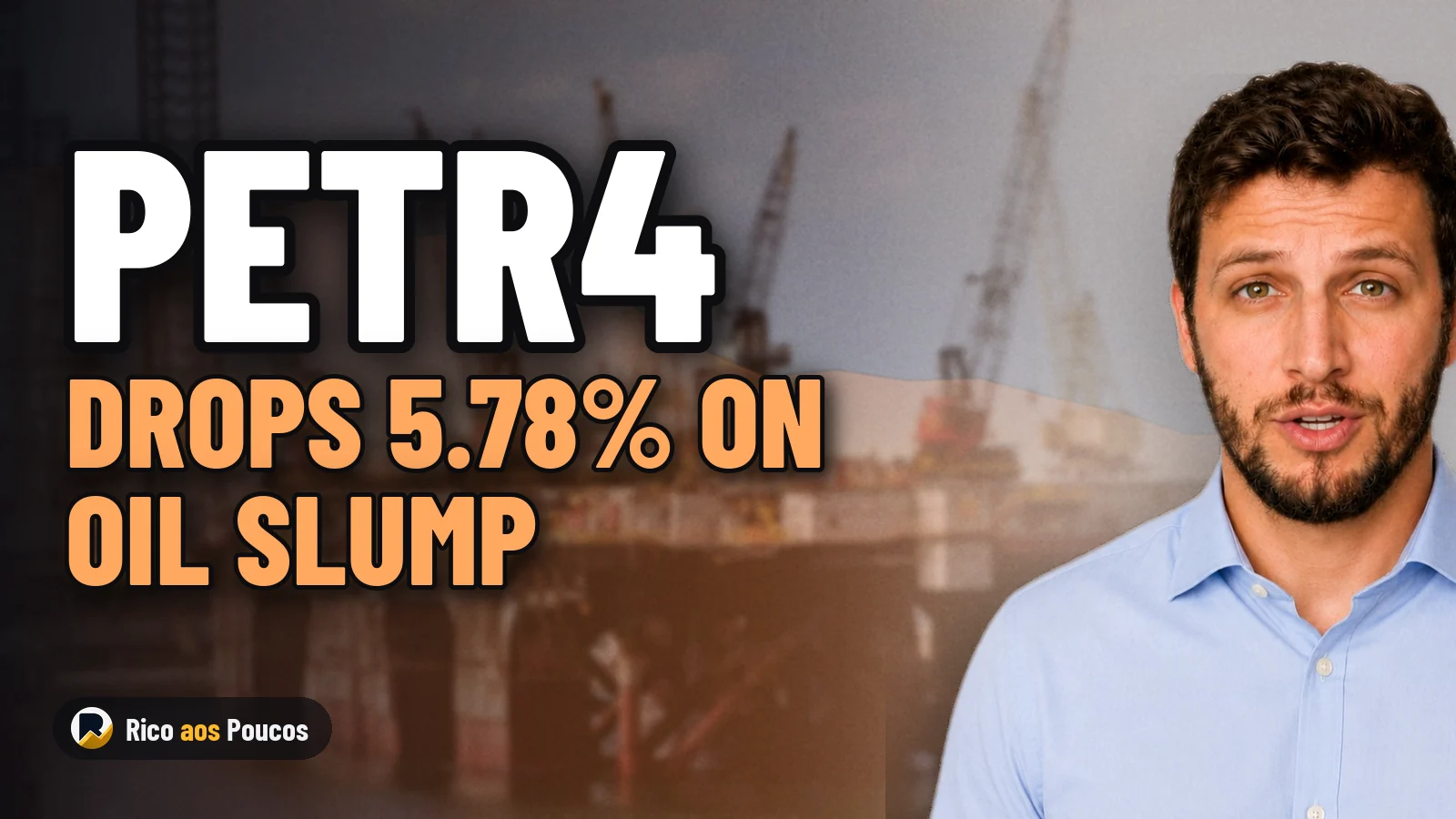


PETR4 shares traded down 5.78% at R$ 47.78 on Wednesday, marking a sharp decline in the session. The drop came on the exact day Petrobras announced to the market that Fitch Ratings had upgraded the company's standalone credit profile.
What Is PETR4's Price Today, and Why Is the Stock Falling Despite the Fitch Upgrade?
PETR4 shares fell sharply by 5.78% today to trade at R$ 47.78, as a collapse in international crude prices outweighed favorable corporate news. Although Fitch improved the oil giant's solvency assessment, selling pressure across the energy sector dictated the direction of trading on the Brazilian stock exchange.
Investors tracking the stock chart in real time encountered a clear disconnect: the company announced a positive, long-term development, but the screen bled red in the short term. Similar risk-off moves in the commodity have pressured domestic stocks recently, as we reported when crude oil futures plunged following geopolitical discussions in the Middle East.
For investors allocating capital to the state-controlled company, the immediate question is whether this pullback creates an opportunity or if the stock is facing a trap driven by the global fuel pricing environment. Answering that requires separating daily price noise from the company's structural financial health.
What Does It Mean for Fitch to Upgrade Petrobras's Standalone Credit Profile?
According to an official statement released by Petróleo Brasileiro S.A. on November 4, 2026, Fitch raised its Standalone Credit Profile (SCP) rating for the company from 'bbb' to 'bbb+' authorities.
This rating measures Petrobras's ability to meet its financial obligations on its own merits, excluding potential bailouts or support from the federal government. It marks the first upgrade of this specific metric for the oil producer since 2020.
As highlighted in Fitch's report, the upgrade stems from three fundamental pillars observed in recent operations: solid corporate governance, sustained financial deleveraging, and robust operating cash flow. The agency noted that the company has maintained capital discipline and management transparency, distancing itself from historical concerns over disorderly political interference.
Fitch's first upgrade since 2020 recognizes robust cash flow and low leverage.
The stock pulled back to R$ 47.78 amid selling pressure triggered by lower crude prices.
This profile revision is not a bureaucratic detail: companies with higher individual ratings can issue debt in international markets at lower interest rates and with longer maturities. Ultimately, a lower cost of capital translates into reduced financial expenses and more surplus cash to reward shareholders through dividends—one of the main draws for retail investors.
Why Did the PETR4 Chart Ignore the Rating and Plunge During the Session?
Despite Fitch's endorsement, the equity market operates on the rule of immediate revenue generation. Petrobras is a pure crude oil producer and exporter; when international commodity prices suffer an abrupt drop, brokerage models immediately revise the company's projected dollar revenues downward for coming quarters.
This dynamic was already clear in the previous session, when PETR4 shares fell 6.7% without any internal negative catalysts, dragged down solely by a broad sell-off in global oil companies. Investors checking oil price tracking tools can clearly see the direct correlation between crude prices abroad and equities on the B3.
Even with operational data indicating that Brazilian production remains at elevated levels—as seen in surveys showing that the country's oil production recently hit record highs—margin compression per barrel sold spooks short-term derivatives traders and speculative positions.
| Pillar Evaluated by Fitch | Agency Assessment | Balance Sheet Impact |
|---|---|---|
| Corporate Governance | Effectiveness and transparency in executive management | Mitigation of political interference risk |
| Financial Leverage | Controlled net debt and extended maturity profile | Lower amortization and interest expenses |
| Cash Generation | Operational capacity to maintain robust liquidity | Sustained dividend distribution |
On days of heavy commodity sell-offs, foreign funds and institutional investors execute automated orders for currency hedges and futures contract sales. The visual result on the intraday chart is a steep downward candlestick that ignores corporate market disclosures and material facts.
What Changes for Investors Holding PETR4 Shares Now?
For investors holding common or preferred shares focused on dividends and capital appreciation, the Fitch announcement provides a layer of security far more significant than a single session's price swing.
A 'bbb+' standalone profile places the company on par with large private peers in the international energy sector. The individual rating is only prevented from translating into a higher sovereign rating because rating agency regulations typically cap state-owned enterprises at the host country's credit rating (Brazil).
Today's 5.78% drop is cyclical in nature, driven by the pullback in overseas commodities, while the Fitch rating upgrade is structural. The risk of default, liquidity crises, or debt non-payment by Petrobras has decreased in the eyes of international agencies. If an investor's thesis relies on solid governance and sustainable dividend payouts, the upgrade reinforces the company's health regardless of this session's closing price.
Attention now turns to the release of the company's upcoming financial statements, where the market will examine whether refining margins and free cash flow continue to support regular dividend payments, even in an environment of softer global crude prices.
